- Research
- Hydro-Engineering
Research
The field of water engineering conducts education and research to solve various water resource problems through engineering.
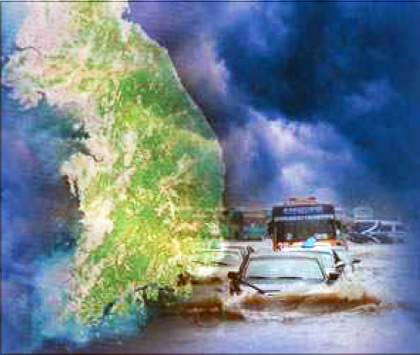
The Climate Change Adaptation Water Resources Laboratory (formerly the Hydrology Laboratory) is conducting research to respond to climate change, a representative science and technology issue of the 21st century, focusing on the field of water resources.
We are conducting various studies to forecast changes in water resources due to climate change and develop strategies to effectively adapt to them. In particular, we are conducting various studies to address the abnormality and uncertainty of climate change.
It also deals with research on interpreting natural disasters such as droughts and floods through risk theory and managing them in an integrated manner.
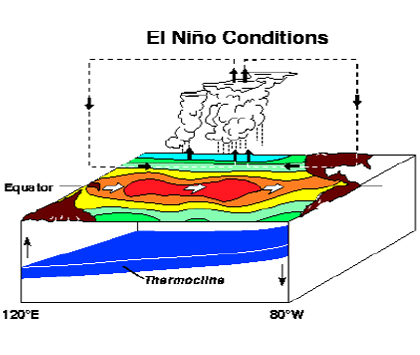
The Fluid Physics and Information Engineering Laboratory studies the movement phenomena of various objects such as air, water, particles, people, and drones.
By linking information engineering based on ML/DL and statistical physics based on fluid dynamics, we are developing technology to interpret and predict flows in cities, rivers, oceans, and the atmosphere from a new perspective.
Based on the philosophy that the unification theory of cascading large-scale energy into small-scale energy is applicable regardless of scale, we analyze energy dissipation at a molecular level and large-scale flows at a global level.
The phenomenon of sea urchin eggs moving and being fertilized in the water and the phenomenon of people colliding and avoiding while moving along the sidewalk are similar to each other and are reproduced by applying the same interpretation method.
We predict river flows, control stratified flows in reservoirs and oceans, provide engineering explanations for the fertilization process of sea urchins and the predation process of killer whales, and study rotational flows in the ocean such as Van Gogh's Starry Night. This idea of physical and ecological flows is also extended to social research by applying it to the most comfortable path for people to travel in cities and the path for people to flow after falling into the water in rivers and coastal areas.
In summary, the academic challenge of the Fluid Physics and Information Engineering Laboratory is to interpret the diverse world from multiple perspectives with one eye.
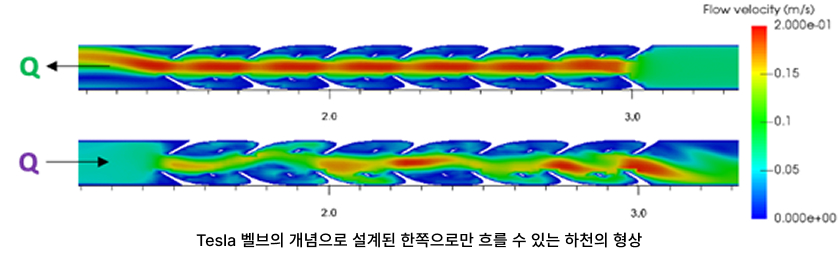
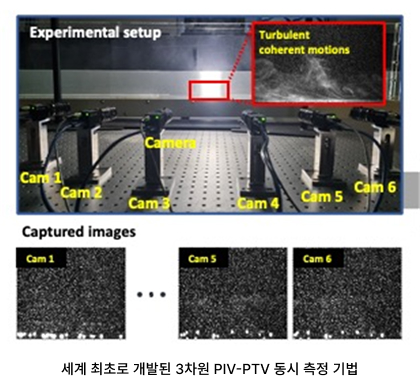
Computational Fluid Dynamics (CFD) is a combination of computational mathematics, fluid dynamics, programming, and high-performance computing, and has grown beyond mathematical curiosity to become the most powerful and essential tool in most fields of natural science and engineering.
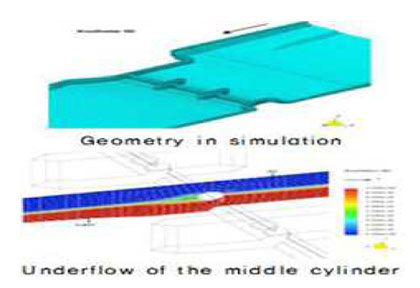
The CFD laboratory focuses on the development of numerical tools for calculation, analysis, optimization and prediction of fluid flow and transport processes in the environment and water bodies (waterways, rivers, lakes, coasts, oceans, aquifers).
The tools developed in the CFD laboratory apply to flows throughout the hydrological cycle and can be applied to a variety of applications in different times and spaces, and have been validated in a variety of projects in Germany, Canada, Korea and Vietnam.
The CFD lab's research topics involve a variety of academic disciplines, making it a field of interest not only to students in the construction environment field but also to students in other engineering fields.
The CFD Lab provides opportunities to collaborate with other departments and research institutes within Seoul National University, as well as other universities and research institutes. In addition, the CFD laboratory provides an environment where education and research can be carried out effectively, and utilizes high-performance computing capabilities to advance numerical modeling and its applications.
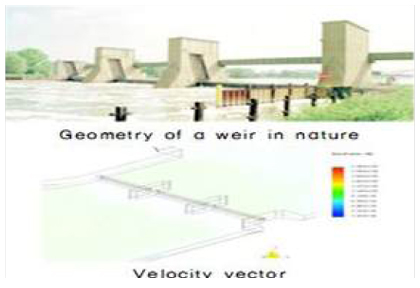
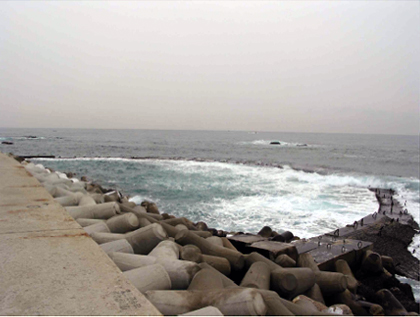
The Coastal Engineering Laboratory conducts research to understand the interaction of waves and currents on the coast with natural or artificial structures and to apply this in engineering.
For example, we study how sand behaves under a tsunami and how new landforms are formed, how ports should be designed to prepare for wind waves, tides, and tsunamis, or how to extract ocean energy most efficiently.
Methodologically, we also study how to accurately reproduce natural phenomena occurring on the coast mathematically, numerically, and experimentally. Ultimately, we aim to solve social problems such as coastal disaster prevention and pursue policymaking of research and development results.
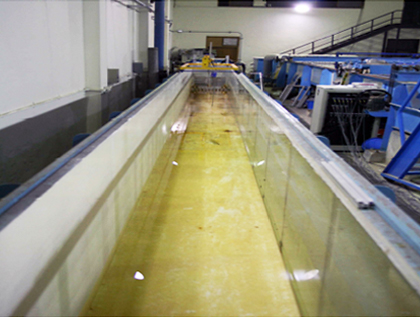
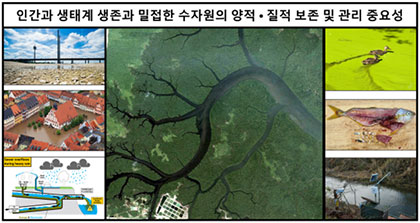
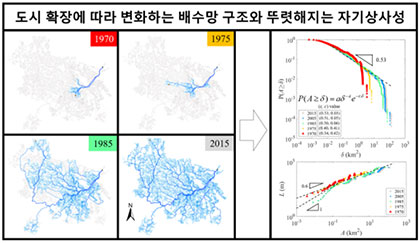
The Urban Water System Laboratory was established in January 2023 with the vision of 'providing optimal water quantity and quality while pursuing harmony and balance between humans and the natural ecosystem.' Our lab is interested in the spatial range where human activities and water coexist, from the scale of a single city to the scale of a large watershed containing multiple cities, and explores the structure, function, and dynamics of water systems related to sustaining human and ecosystem life from a scientific and engineering perspective. For example, we study what structural characteristics natural river systems that have developed in response to global hydrological and surface environmental changes and urban drainage systems built according to man-made design standards share, and how a model to simulate the flow of water and pollutants in each system can be built based on this. In addition, considering the future variability of hydrometeorological factors and the expansion and decline of urban areas, we are interested in the hydrological response of natural and artificial water drainage systems that will change, and plan to develop this as a major research topic. The main research methodologies include analysis of various water-related big data such as water quantity and water quality observation data, development of numerical models based on core processes, and network theories that explain the emergence of complex surface hydrological systems. Future research plans include research to build a high-temporal resolution observation and monitoring system for urban rivers, evaluate river environment protection policies based on monitoring results, and suggest future directions, and research to advance the river discharge simulation results of the rainfall-runoff model using machine learning and deep learning algorithms.