- Research
- Environmental Engineering
Research

Environmental engineering is a field that views humans and the environment as one system and contributes to sustainable and environmentally friendly development so that current and future generations can enjoy a comfortable life.
Human life depends on various resources such as metal and non-metallic minerals, fossil fuels, biomass, and water, but indiscriminate resource consumption causes environmental problems such as climate change and resource depletion.
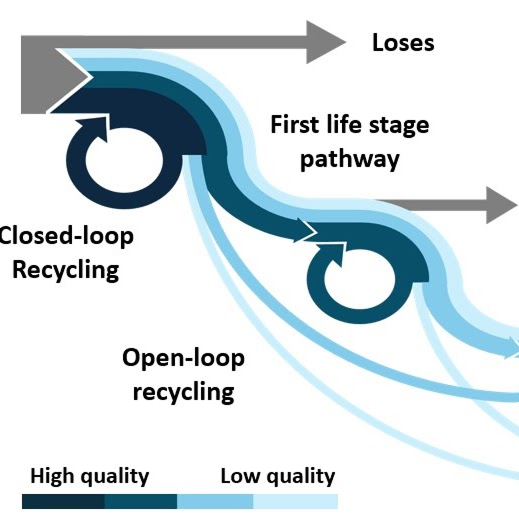
Sustainable Engineering is a field that studies circular economy strategies that efficiently use resources and maximize their value to solve these problems, and aims to contribute to the realization of sustainable development, carbon neutrality, and ESG management.
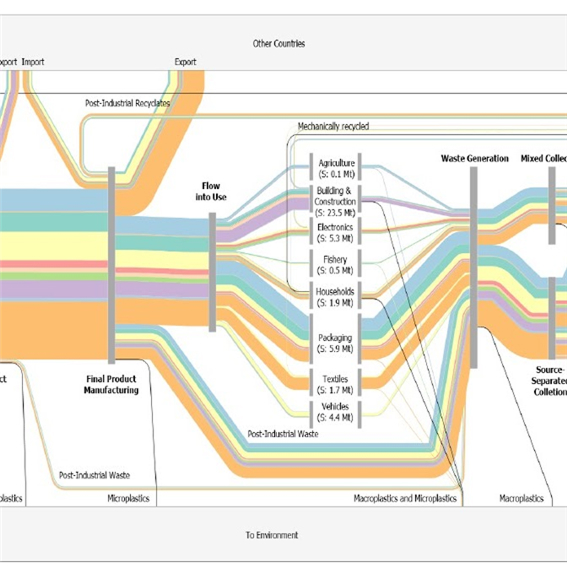
The main methodologies are material flow analysis, which models the flow of resources in a system (industry, city, country, etc.), and life cycle assessment, which quantifies the environmental impact of resource consumption.
In particular, the Material Flow and Carbon Modeling Lab conducts research to estimate and spatially map in-use stocks, resource consumption, and embedded carbon accumulated in city buildings and infrastructure for a circular economy for key resources such as buildings, wood, plastic, and future waste resources, research to derive circular economy strategies based on this and calculate carbon emission reduction potential, and research to develop a life cycle evaluation framework specialized for the circular economy.

Due to human industrial activities, the environment, including soil and water, has been polluted with countless types of chemicals over the past century, and hundreds of new types of chemicals are still produced every year.
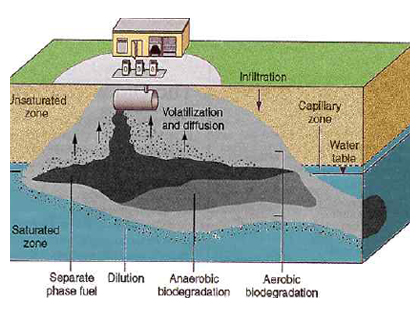
These chemicals that enter the soil are naturally decomposed by soil microorganisms, photochemical reactions, and evaporation, but they react with soil components (mainly organic matter and minerals) and remain in the soil in significant amounts for a long time, causing side effects to humans and the ecosystem. Depending on their nature, they may also flow underground and cause groundwater contamination.
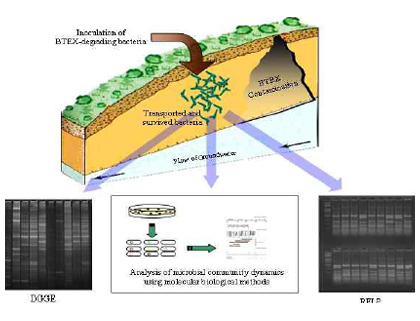
The Soil Environment Laboratory seeks to develop technologies to evaluate, purify, and restore contaminated soil and groundwater by applying knowledge from various fields such as environmental engineering, (micro)biology, toxicology, and soil science. We also evaluate changes in the ecological environment due to construction projects and seek ways to minimize them.
Our main concern is not the indiscriminate development of restoration technology, but rather presenting a new concept of environmental management/restoration technology and direction that is economical, reasonable, and efficient by appropriately balancing scientific knowledge and engineering practicality.
We mainly conduct research on the impact of the behavior of pollutants in soil on the efficiency of restoration technology, research on increasing the efficiency of bioremediation technology, research using biotechnology techniques, investigation of contamination through risk assessment, and research on determining reasonable purification levels.
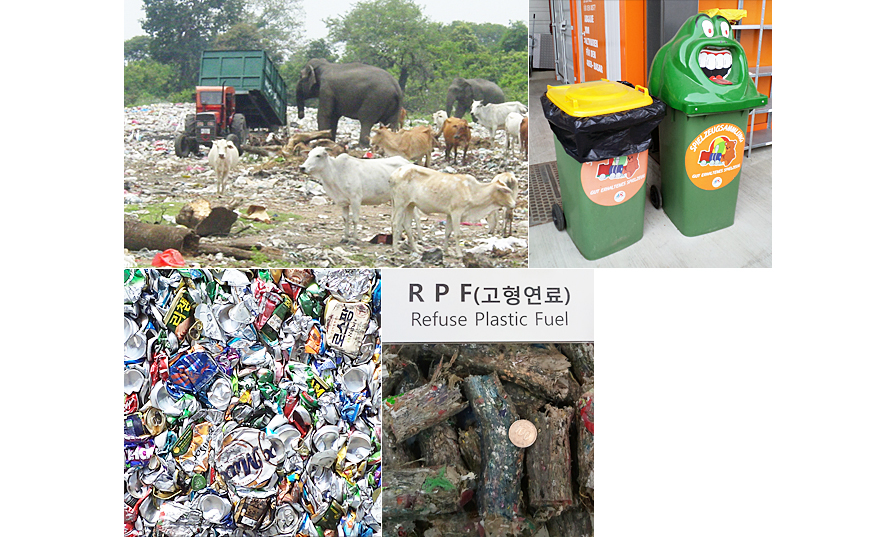
Management of household waste generated in cities is a traditional research subject of waste laboratories. These include biogas conversion of organic waste such as food waste, contamination of the surrounding ground environment due to waste landfill design and landfill, prediction of greenhouse gas generation due to landfill waste decomposition, and leachate treatment. Recently, in order to respond to the reality that environmental problems caused by waste are becoming increasingly widespread and complex, we are conducting various research such as evaluating the behavior of trace pollutants in organic waste biogasification facilities, developing greenhouse gas measurement methods in waste landfills using UAV (Unmanned Aerial Vehicle), developing eco-friendly biochar based on agricultural by-products, tracking the causes of fine dust in urban spaces, developing nano metal-organic waste composite environmental materials, and predicting and managing disaster waste through statistical approaches.
The Water Quality and Environment Laboratory aims to contribute to building a next-generation urban water management system by developing technology for resource recovery from contaminated water, water treatment, water quality monitoring, and sediment management.
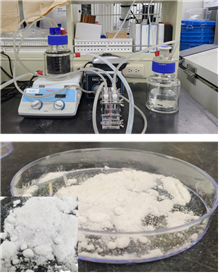
The Water Quality and Environment Laboratory has recently developed the world's first technology to recover ammonia nitrogen present in domestic sewage, industrial wastewater, and agricultural and livestock wastewater into pure ammonia salt crystals using a membrane contactor and solvent crystallization linked process. We are currently conducting follow-up research to apply this technology to actual treatment facilities.In addition, we are developing adsorbents to effectively remove trace toxic substances present in water and conducting research to improve scientific understanding of the adsorption mechanism of toxic substances.
We are also conducting research to quickly and accurately monitor pollutants present in water and sediments, and to restore them to safe habitats for the ecosystem by purifying sediment-contaminated areas in a low-cost and eco-friendly manner.
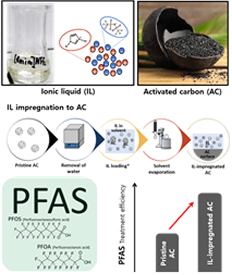
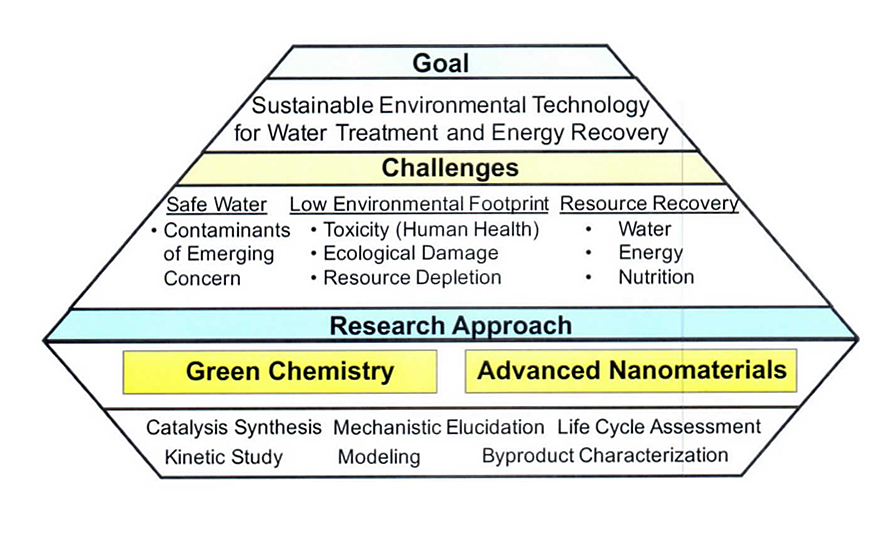
The Sustainable Environmental Technology Laboratory is interested in the development of water treatment and energy-resource recovery technologies using advanced nano materials. Our laboratory aims to improve the sustainability of existing water and wastewater treatment process technologies and technologies currently being developed through convergence research combining environmental engineering, green chemistry, and environmental sustainability analysis and optimization.
Currently, our laboratory is conducting research focusing on 1) the development of technology for chemical treatment and by-product generation control technology using advanced metal catalysts for new contaminants existing in the water environment, and 2) the development and evaluation of new materials and processes that can minimize the environmental footprint and recover potential resources.