- Research
- Urban Design & Planning
Research
Urban planning is a specialized field that predicts and solves all urban problems in advance. It is a social technology that explores the desirable development direction of the city, the form and functional composition of the urban spatial structure, the creation of the physical environment, and various policies for its realization.
Urban design is an academic field that involves various academic fields such as urban planning, civil engineering, transportation, architecture, landscaping, design, real estate, humanities, and urban policy to create a convenient, comfortable, and aesthetic residential environment.
Accordingly, it is concerned with the act of creating three-dimensional physical environments and their integrated plans. In this way, urban design creates new areas not only through specialized research in each field, but also through continuous convergence of these fields.
The scope covered is wide, from urban residential environments to ecological environments and humanities environments. In order to deal with such a wide range of fields, urban designers are required to have knowledge in various fields.
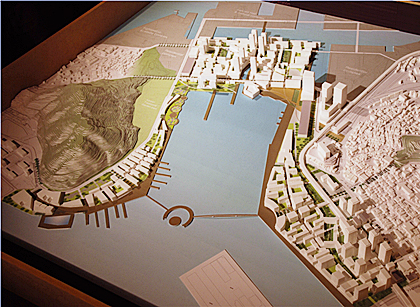
Recently, research is being conducted on complex design, desirable residential environments, urban regeneration, new city and overseas urban design, urban sustainability, urban culture, waterfront, etc., and through this, a new model of the physical spatial environment is being presented.
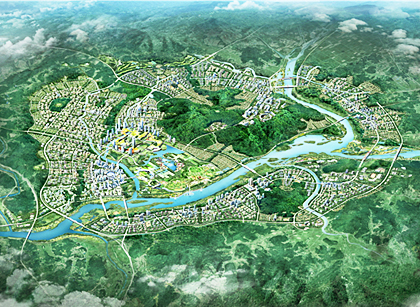
I believe that cities of the future will face major social problems and challenges such as regional imbalance and disappearance of rural areas due to population decline and aging.
In particular, smart city element technologies such as smart technology, equipment, and cloud control are expected to address issues such as vitality, safety, pedestrian rights, and economy in declining cities, and contribute greatly to reorganizing urban space in line with the era of the Fourth Industrial Revolution and improving the smart quality of life for citizens.
Accordingly, the Smart City Planning Lab aims to conduct convergence and interdisciplinary research by actively utilizing technologies, methodologies, and values from other fields such as construction, environment, transportation, and geographic information, as well as the traditional urban planning approach that observes urban problems and suggests policy alternatives in the field of urban management and maintenance based on the convergence of engineering and humanities on urban phenomena and problems.
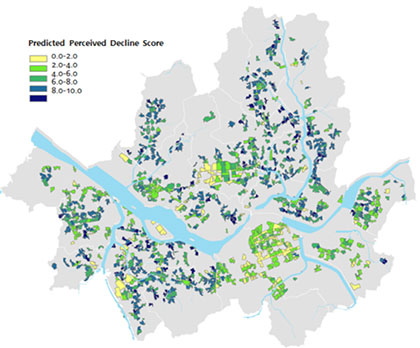
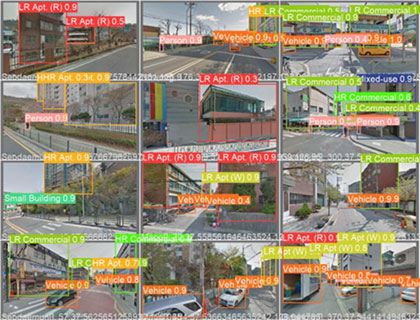
Recent studies are conducting research to respond to rental housing, urban decline, and future land use planning by utilizing methodologies such as artificial intelligence, computer vision, spatial data mining and analysis, and digital transformation to solve social problems.